
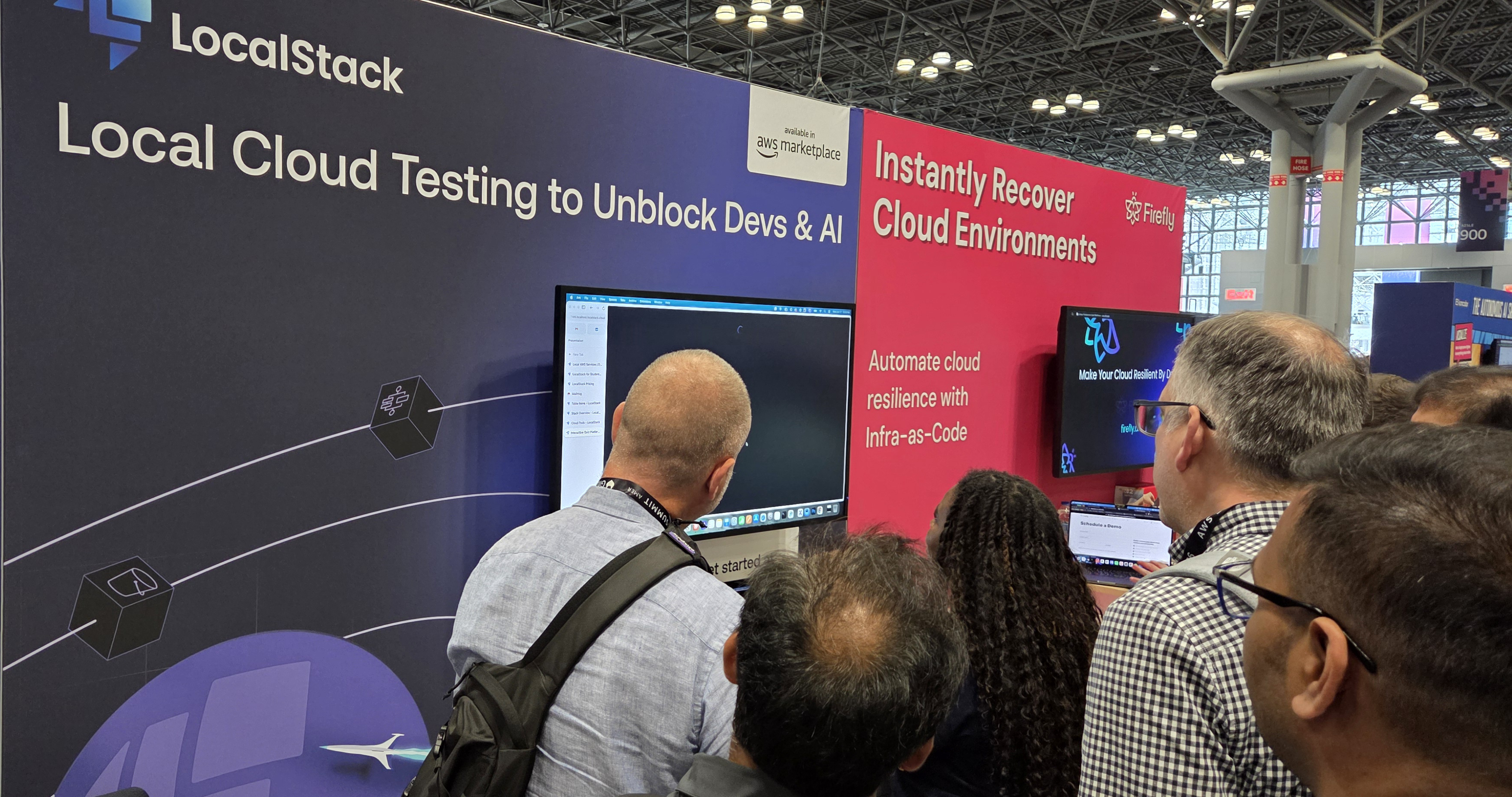
New York hosts the largest regional AWS summit in North America, and this year it lived up to that reputation: roughly 16,000 attendees packed the Javits Center, nearly 60% of them from enterprises in financial services, software, and media. The numbers were good. The conversations were better.
What we heard, over and over
Talk to enough developers and tech leaders in one day, and patterns emerge fast. This year, one theme dominated nearly every booth conversation: AI agents are already creating both application and infrastructure code, and nobody has fully figured out what to do with it all. Ask an agent to generate a CDK stack, a Terraform module, or a pile of IAM policies, and it’ll happily comply in seconds. Whether any of it actually works is a different question, and the traditional way to find out is to deploy to a real AWS account and see what breaks.
That’s an expensive way to learn something. In an agentic workflow, it also means handing agents live AWS credentials, racking up cloud costs on every test run, and waiting on provisioning to validate a single change. At the summit, leaders in regulated industries like financial services were candid about the tension: they want teams, and increasingly agents, moving fast without sacrificing compliance or predictable spend.
Closing the loop
It’s a problem we’ve been thinking about for a while, and the summit confirmed it’s only getting more urgent. Giving an AI agent a local AWS environment means it can generate infrastructure code, deploy it, and validate it, all without touching a real account or a real bill. Failures show up instantly, logs are inspectable, and fixes get validated in the same local loop. When the code is ready, switching the endpoint from local to production is a config change, not a rewrite. For financial services teams specifically, sensitive data never has to leave the network perimeter in the first place.
We heard this land with people from large, complex organizations, among many others who stopped by the booth throughout the day. The best conversations weren’t about features. They were developers describing a workflow they’d already half-built themselves, relieved to find a tool that closes the gap.
Looking ahead
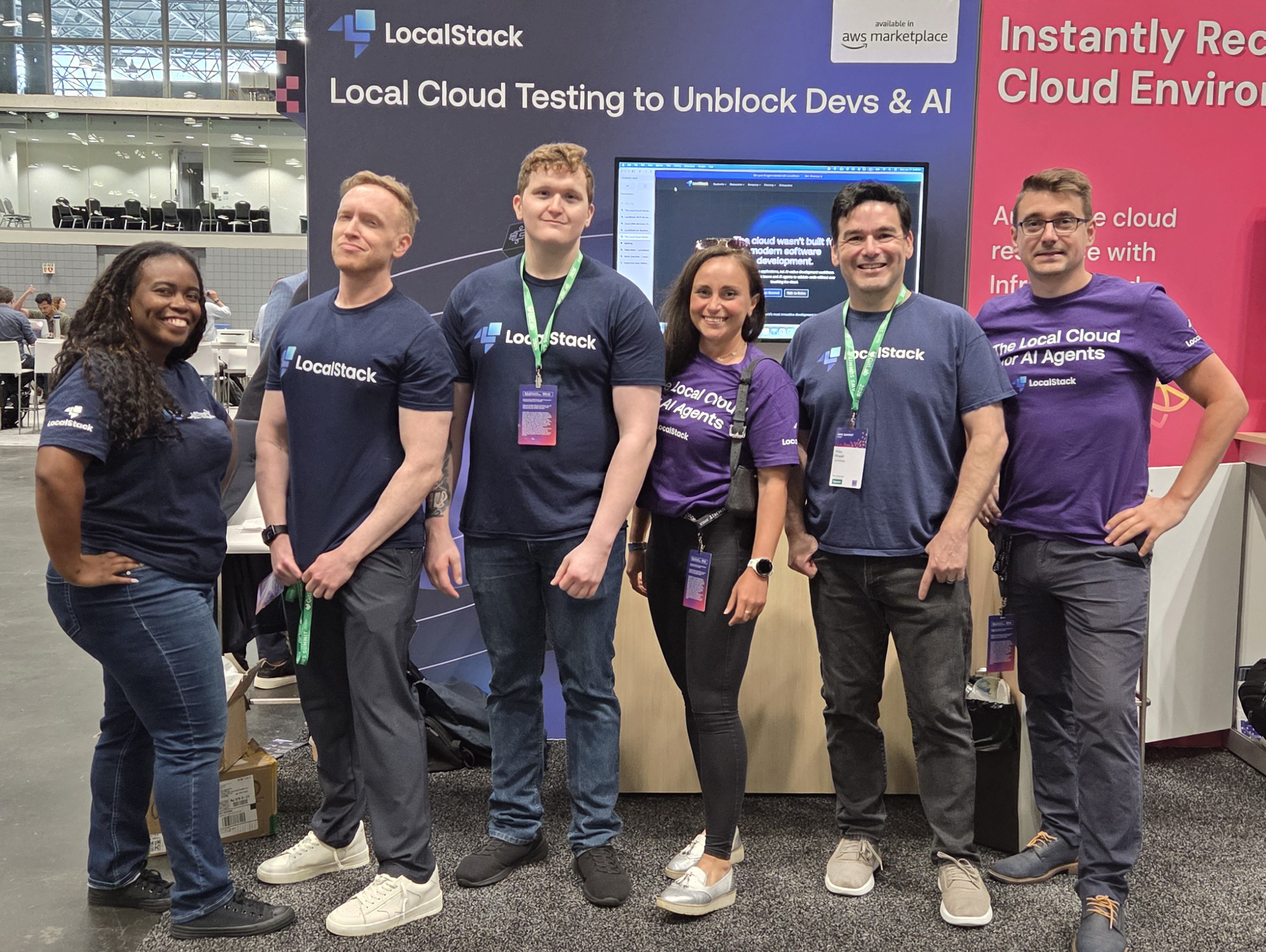
AWS Summit NYC told us the agentic AI story isn’t a bet on the future; it’s already how teams are trying to work today. LocalStack gives AI agents a local AWS environment to build and validate infrastructure code before it ever touches production, and hearing that resonate with engineers and tech leaders from major companies confirmed it: this isn’t a niche problem, it’s the next default way teams will build with AI. Agentic development isn’t slowing down, and neither are we. See you at the next summit!